 CardCash Blog
Sukkot, also known as the Feast of Tabernacles or Feast of Booths, is one of the most joyful holidays on the Jewish calendar. It celebrates the fall harvest while commemorating the forty years the Israelites spent traveling through the desert after the Exodus from Egypt, living in temporary shelters along the way.
Coming just days after the solemn High Holidays, Sukkot brings a welcome change of pace. It is a time for gathering with family and friends, enjoying meals outdoors, welcoming guests, and celebrating the abundance of the season.
And because Sukkot lasts an entire week, there’s plenty of time to make memories around the table.
When is Sukkot 2026?
Sukkot in 2026 begins at sundown on Friday, September 25, and ends at nightfall on Friday, October 2. Like other Jewish holidays, Sukkot follows the Hebrew calendar and begins on the 15th day of the Hebrew month of Tishrei, five days after Yom Kippur.
The holiday is followed immediately by Shemini Atzeret and Simchat Torah, which bring the fall holiday season to a close.
Is Sukkot the same day every year?
Not on the Gregorian calendar. The Jewish calendar is lunisolar, so Jewish holidays fall on different dates from year to year when viewed on the standard Gregorian calendar.
Sukkot, however, always begins on the 15th of Tishrei.
| Year | Sukkot Begins | Sukkot Ends |
|---|---|---|
| 2026 | Friday, Sept. 25 | Friday, Oct. 2 |
| 2027 | Thursday, Oct. 14 | Thursday, Oct. 21 |
| 2028 | Tuesday, Oct. 3 | Tuesday, Oct. 10 |
| 2029 | Sunday, Sept. 23 | Sunday, Sept. 30 |
What happens during Sukkot?
One of the most recognizable traditions of Sukkot is building and spending time in a sukkah, a temporary structure with a roof made from natural materials such as branches or bamboo. The roof is intentionally open enough to allow those inside to see the sky.
Families traditionally eat their meals in the sukkah throughout the holiday, and some choose to sleep there as well. The experience is meant to recall the temporary shelters used by the Israelites during their journey through the desert.
Sukkot also features the Four Species, or Arba Minim: the lulav, made from a palm branch along with myrtle and willow branches, and the etrog, a citron fruit. They are held and waved together during prayers as part of the holiday’s traditions.
Another important theme of Sukkot is hospitality. The holiday encourages people to welcome guests into the sukkah and share meals together, making the dining table an important part of the celebration.
Building a sukkah in the city
You don’t need a large backyard to enjoy the traditions of Sukkot.
Depending on local rules and circumstances, families living in apartments may build a sukkah on a balcony, rooftop, terrace, or other suitable outdoor space. Some communities and synagogues also provide shared sukkahs for people who don’t have room to build one at home.
The size of the sukkah may change, but the idea remains the same: creating a temporary space where people can gather, eat, and celebrate together.
What do you eat during Sukkot?
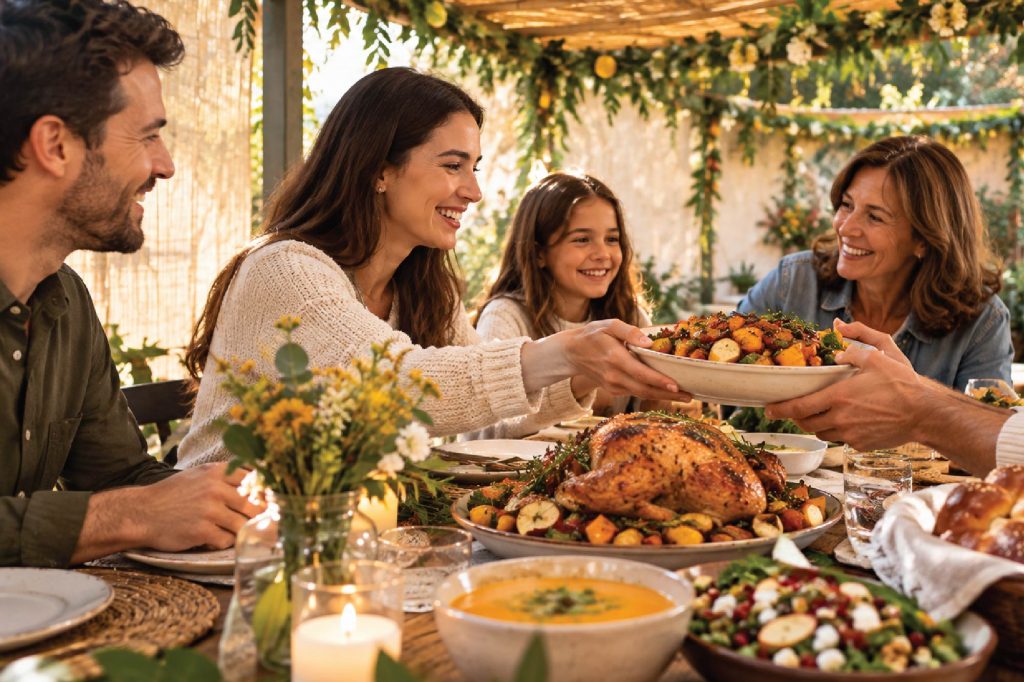
There isn’t one specific menu that every family follows for Sukkot, but the holiday’s connection to the fall harvest makes seasonal ingredients a natural fit.
Think hearty soups, roasted vegetables, apples, squash, pomegranates, fresh salads, and comforting dishes that are easy to share with a group.
Because Sukkot lasts for a full week, planning ahead can also make hosting much easier.
Sukkot Dinner Ideas
If you’re looking for ideas beyond the usual roasted vegetables and salad, there are plenty of dishes that work well for a festive meal.
Start with a warm soup. Butternut squash, pumpkin, chicken, lentil, or vegetable soup can be prepared ahead of time and reheated when you’re ready to serve.
Make a hearty main dish. Brisket, roasted chicken, stuffed cabbage, or stuffed vegetables can work especially well when you’re feeding a larger group. Many of these dishes can also be prepared in advance, giving you more time with your guests.
Add seasonal sides. Roasted carrots, squash, potatoes, rice with dried fruit, kugel, or a fresh apple and pomegranate salad can bring the flavors of fall to the table.
Don’t forget dessert. Apple cake, honey cake, fruit tarts, pumpkin bread, or fresh seasonal fruit can make an easy finish to a Sukkot dinner.
Planning meals for a full week
One of the challenges of Sukkot is that you’re not planning just one holiday dinner. There can be several meals with family and friends throughout the week.
A little planning can make a big difference.
For the first nights, you might prepare a more traditional holiday dinner with a main course, several sides, and dessert. During Chol HaMoed, the intermediate days of Sukkot, meals can be more relaxed.
Leftover brisket can become sandwiches. Roasted vegetables can go into salads or grain bowls. Extra chicken can become wraps or a simple dinner the following night.
And there’s nothing wrong with taking a night off from cooking altogether.
The goal isn’t to create a completely different elaborate meal every night. It’s to have enough variety to keep the week interesting while giving yourself time to actually enjoy it.
A week built around hosting
Because Sukkot is celebrated over several days, the holiday naturally creates plenty of opportunities to host.
If you’re inviting family or friends into your sukkah, dishes that can be prepared ahead of time can make entertaining much less stressful. You can also ask guests to bring a side, dessert, or another contribution to the meal.
And if you’re the guest, bringing something for the table is always a thoughtful gesture.
Whether it’s a homemade dessert, fresh fruit, or a bottle of wine, a small contribution can make a shared meal feel even more special.
Save on Sukkot meals with CardCash
A week of hosting can also mean a longer grocery list. Between ingredients for several dinners, snacks, drinks, desserts, and last-minute items, the cost of preparing for Sukkot can add up.
That’s where CardCash can help you stretch your budget.
CardCash offers discounted gift cards from a variety of grocery stores, making it possible to save when shopping for the ingredients you need for your Sukkot meals. Depending on availability, you can find gift cards for stores such as Kroger, Safeway, Publix, Albertsons, Walgreens, CVS, Instacart, and more.
And if you decide to take a break from cooking during Chol HaMoed, CardCash also offers discounted gift cards for restaurants, giving you another way to save while enjoying a meal out with family or friends.
Before heading to the grocery store or making dinner plans, take a look at the available gift cards on CardCash. A little savings on each shopping trip can add up over a full week of holiday meals.
Making Sukkot special
Sukkot is about more than the food on the table or the sukkah in the backyard. It is a week dedicated to gratitude, hospitality, family, and community.
Whether you’re preparing a large holiday dinner, sharing leftovers with friends, enjoying a casual meal during Chol HaMoed, or simply sitting together in the sukkah after dinner, the traditions of Sukkot create opportunities to slow down and enjoy time with the people around you.
With a little planning—and a few smart ways to save—you can spend less time worrying about the week’s meals and more time enjoying them.
Chag Sameach!


